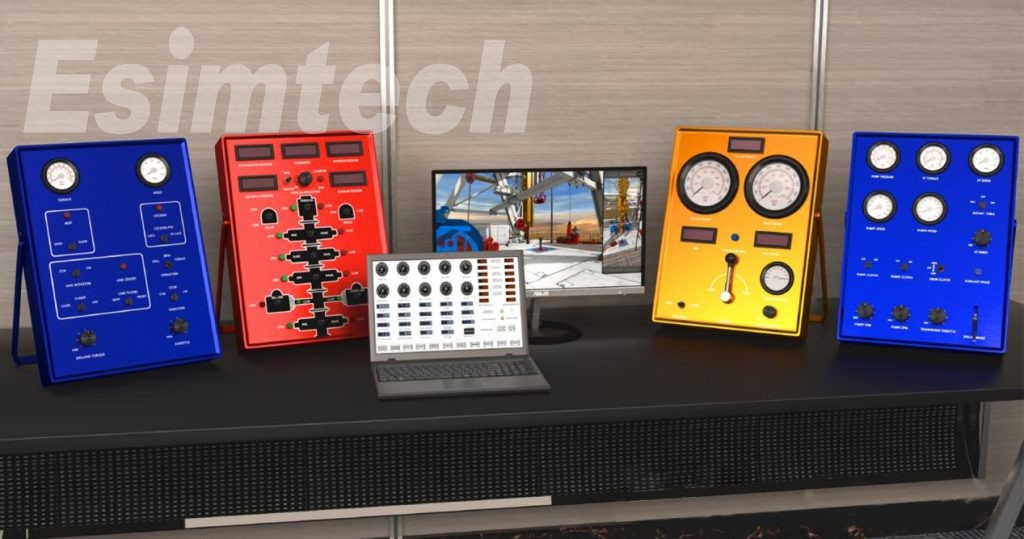
The use of well logging simulators is an excellent way to improve oil and gas exploration and production activities because they provide a useful tool. They offer a method that is not only secure but also efficient and cost-effective for training personnel, evaluating equipment, and testing exploration scenarios. It is essential to have accurate and reliable well logging data in order to make educated decisions regarding drilling and production operations, and well logging simulators help improve both the accuracy and reliability of this data. In spite of the obstacles, it is likely that well logging simulators will become even more sophisticated in the future and will be integrated with other software tools. This will result in oil and gas production that is more efficient and sustainable. In the not too distant future, well logging simulators are likely going to become even more technologically advanced and integrated with other software tools. The following are some of the most important developments in well logging simulators:
Services Hosted in the Cloud
Well logging simulators are not an exception to the trend in the oil and gas industry toward using cloud-based services, which are becoming increasingly popular. Cloud-based services offer a solution that is more adaptable and scalable, making them ideal for purposes relating to training and testing. They also make it possible for businesses to save money on the cost of hardware and software.
AI and ML (machine learning and artificial intelligence)
It is anticipated that artificial intelligence and machine learning will play an increasingly important role in the development of well logging simulator. Machine learning algorithms can find patterns and correlations in large datasets of well logging data that human analysts might miss. These algorithms work by analyzing the data to find patterns and correlations in large datasets of well logging data. This can lead to more accurate predictions of the properties of the reservoir, which in turn can lead to better decisions regarding drilling and production operations.
Enhanced Graphical User Interfaces
The user interfaces and visualization tools of well logging simulators are being upgraded, which results in the simulators' increased accessibility. Because of this, it may become less difficult for personnel to use simulators and interpret the results.
Integration with Data Sources That Update In Real Time
It is possible for operators to receive up-to-date information on drilling and production operations by integrating well logging simulators with real-time data sources. This can make it easier to make decisions quickly and adjust logging parameters based on data that is being collected in real time.
The Obstacles Faced by the Well Logging Simulator
In spite of the fact that there are a great number of advantages to be gained from using well logging simulators, there are also a few challenges that need to be addressed. These are the following:
Modeling of the Earth's Geology Can Be Complicated
To construct a geological model that is both accurate and plausible, one needs to have a comprehensive knowledge of the geology of the subsurface, which can be difficult to acquire. In addition, geological models need to be updated on a consistent basis in order to take into account new data and observations, which can be a time-consuming and costly process.
The Quantity and Quality of the Data
In order to produce results that are accurate and trustworthy, well logging simulators rely on data that is both of high quality and quantity. However, collecting data of a high quality and quantity can be difficult, particularly in geological environments with a high degree of complexity. Incorrect or insufficient data can lead to inaccurate simulation results, which in turn can have significant repercussions for both the drilling and production operations.
Availability of More Advanced Simulators Is Restricted
There are not a lot of advanced well logging simulators on the market, and those that do exist typically lack features like real-time data visualization and interactive well planning. A great number of simulators are tailored to particular logging processes and/or have functionalities that are severely restricted. Because of this, it can be difficult for businesses to find a simulator that is tailored to their particular specifications and prerequisites.
Integration with Existing System Infrastructures
It can be difficult to integrate well logging simulators with legacy systems. A wide variety of software tools and data management systems are utilized by many businesses today; some of these may not be compatible with the simulator. It takes a significant amount of resources and expertise to integrate simulators with legacy systems, which can be a significant barrier to adoption of the technology.
Competencies and Instruction
The utilization of well logging simulators calls for the acquisition of specialized skills in addition to training. The workforce is required to have a comprehensive comprehension of the subsurface geology, logging tools, and simulation software. This can be difficult to obtain, and as a result, the use of simulators in some companies may be restricted as a result.
In order to provide an approach to oil and gas exploration and production that is more integrated and comprehensive, well logging simulators can be integrated with other software tools, such as geological modeling and reservoir simulation. This makes it possible to provide a more comprehensive and integrated solution. Companies are able to develop reservoir models that are more accurate and comprehensive when they integrate well logging simulators with other software tools. This enables the companies to make better decisions regarding drilling and production operations.